RENMIN UNIVERSITY of CHINA






Throughout the long course of human historical development, cultural exchanges and integration have consistently served as vital forces driving social progress. With the continuous deepening of globalization and the gradual establishment of an interconnected global framework in the contemporary world, contact and dialogue between different civilizations have become increasingly frequent. Cultural exchanges are no longer confined to the macro level of nations or abstract theoretical guidance, but have penetrated into the micro level of individuals and concrete life practices, with participants expanding from traditional elite groups to the broader general public. A thorough understanding of how global populations participate in cultural exchanges, perceive cross-cultural contact, and select and absorb foreign cultural elements is of great significance for grasping the current state, trending characteristics, and inherent mechanisms of cultural exchanges. Public-level practices in cultural exchanges not only reflect the new features of cross-cultural communication in the era of globalization, but also provide an important social foundation for building a more inclusive, open, and mutually enriching framework for civilizational development.
I. Characteristics of Daily Cross-Cultural Contact Behaviors
The daily cultural contact behaviors of global populations demonstrate high levels of cross-cultural engagement. The survey reveals that 57.4% of respondents frequently use foreign technologies. This represents the most prevalent form of cross-cultural contact behavior, reflecting the profound penetration of technological dissemination in the era of globalization. Frequent attention to international news follows closely, accounting for 56.2%, demonstrating respondents' high level of concern for global affairs and their proactive approach to acquiring relevant information. Frequent use of foreign products or services accounts for 53%, with 30.7% of respondents indicating occasional use, illustrating the internationalization trend in consumer behavior and the extensive nature of material cultural exchanges.
Cross-cultural interpersonal interactions and exposure to foreign culinary cultures constitute the second tier. 43.5% of respondents have experienced frequent exchanges with people from other cultures, demonstrating the significant role of cross-cultural interpersonal interactions in contemporary social life. 42.7% of respondents indicate they frequently consume foreign cuisine, while 37.4% report occasional experimentation, with a combined proportion reaching 80%.

Figure 2.1 Frequency of Daily Cross-Cultural Contact Behaviors
The survey further reveals that the majority of respondents have experienced profound and direct exposure to other cultures. The proportion of those who visited foreign countries in the past five years reached 65.2%. 64% had experience learning foreign languages within the past five years, reflecting a proactive attitude toward acquiring tools for cross-cultural communication. 62.4% indicated participation in celebrations of festivals from other cultures, demonstrating a certain degree of interest in and tolerance for foreign cultural traditions.
The survey reveals that respondents' cross-cultural contact behaviors exhibit significant regional and age-related differences, with these disparities demonstrating relatively consistent patterns across different dimensions of cross-cultural exchange activities. From a regional perspective, European respondents showed the highest propensity for visiting foreign countries over the past five years at 71.9%, followed closely by Asian regions at 67.3%, while North America registered relatively lower participation at 47.5%. Regarding the celebration of festivals from other cultures, foreign language learning, and attention to international news, African populations demonstrated stronger engagement enthusiasm, with celebration of other cultural festivals reaching as high as 75.5%, foreign language learning at 78.2%, and frequent attention to international news at 66.3%. In contrast, North American respondents appeared more conservative, with only 51.5% celebrating festivals from other cultures, 38.5% learning foreign languages, and 43.3% frequently following international news.
Regional differences may be correlated with the historical cultural traditions and levels of economic and social development in each region. Europe's leading position in international travel behavior stems from its advanced economic development and the profound advancement of regional integration processes. The enthusiasm of African respondents in learning foreign cultures and acquiring information reflects developing countries' strong interest in and willingness to learn from the external world. Meanwhile, the relatively conservative behavior of North American populations may be associated with the region's status as a global economic and cultural center since World War II.
From an age-based perspective, younger demographics demonstrate significantly higher participation in cross-cultural activities compared to older groups. This trend is particularly pronounced in foreign language learning, where the 18-24 age group reaches as high as 81.8%, while the 55-65 age group accounts for only 46%. The 25-34 demographic shows the greatest enthusiasm across most cross-cultural activities, with foreign travel at 70.4%, participation in celebrations of other cultural festivals at 72.4%, and foreign language learning at 74.8%. In contrast, older groups exhibit an inverse pattern in international news consumption, with the 55-65 age group frequently following international news at 62%, significantly higher than the 44.1% recorded for the 18-24 demographic.
The differences between younger and older generations may reflect the changing external environments in which different generational cohorts have grown up. The high-frequency participation of younger groups in cross-cultural activities demonstrates the natural acceptance and open-mindedness toward multiculturalism among the new generation raised in a globalized context, which is also related to their existence in the digital age. The younger generation has been exposed to the internet and social media from an early age, becoming accustomed to engaging in cross-cultural communication within virtual spaces, while also having greater access to foreign language learning resources and cross-cultural experience opportunities through various platforms.
II. Attitudes and Willingness Toward Cross-Cultural Exchange
Global populations demonstrate both strong cultural confidence and relatively open and inclusive values. The survey reveals that respondents' cultural pride reaches as high as 90.7%, fully reflecting their profound identification with and confidence in their indigenous cultures. Simultaneously, respondents who positively evaluate foreign cultural experiences account for as much as 93.4%, while those who positively assess the influence of foreign cultures comprise 79.4%, with only 9.8% of respondents holding negative attitudes.
Regarding willingness toward cultural openness, respondents demonstrate overall positive cross-cultural adaptability, international orientation, and multicultural values.When discussing adaptation experiences in cross-cultural linguistic environments, 54.9% of respondents report feeling comfortable, while only 14.1% express discomfort, indicating that most respondents possess strong adaptive capacity in cross-cultural linguistic settings. Respondents' willingness to live overseas reaches 74.9%, reflecting their strong aspiration for cross-cultural living experiences and open-minded attitudes. Recognition of the importance of multicultural education among respondents reaches as high as 81.2%, demonstrating their profound understanding of and supportive stance toward the value of diversity in cultural education. In contrast, respondents' attitudes toward accepting immigrants are relatively conservative: only 41.1% express agreement, while 29% maintain neutral positions, suggesting that willingness toward cultural openness reveals complex consideration mechanisms when involving specific social policies and resource allocation issues.
Regarding expectations for future trends in global cultural development, respondents' attitudes demonstrate clear polarization: 45% believe world cultures will become increasingly similar, 30.3% of respondents anticipate cultures will become more diverse, and 20.3% consider them to remain essentially unchanged. This may reflect the complex reality of coexisting cultural homogenization and diversification within the globalization process, while also embodying the pluralistic characteristics of respondents' assessments of cultural transformation trends. This polarized pattern indicates that contemporary global populations' perceptions of cultural development trends are influenced by globalizing and homogenizing forces, while simultaneously reflecting adherence to the value of cultural diversity and encompassing expectations for the continuity of cultural traditions, thereby forming a complex and pluralistic structure of cultural prospect expectations.
Taken comprehensively, respondents' cultural attitudes exhibit fundamental characteristics of "high confidence, strong openness, and broad inclusiveness," maintaining profound identification with indigenous cultures while holding positive and open attitudes toward foreign cultures and cross-cultural experiences. This social mindset provides favorable psychological foundations and social conditions for mutual exchange and learning among different civilizations, reflecting the balanced development trajectory between cultural identity and cultural openness in modern society under globalization. However, the relatively conservative attitude toward immigrant acceptance reveals the complexity of willingness toward cultural openness, indicating that when cultural exchange transitions from abstract concepts to concrete social practices, public attitudes are influenced by practical factors such as resource allocation and social stability, reflecting the inherent tension between ideals and reality.
III. Acceptance and Integration Preferences for Foreign Cultural Elements
Global populations' acceptance and integration preferences for cross-cultural elements demonstrate clear practical and life-oriented orientations. The survey reveals that technology becomes the foreign cultural element respondents most anticipate absorbing, accounting for 63.9%, which remains consistent with contact behaviors. Cuisine follows closely at 52.9%, reflecting the unique appeal and universal attraction of culinary culture as an essential component of daily life in cross-cultural exchanges. Absorption preferences for music and arts reach 47.4%, while lifestyle presents a similar pattern at 46.4%. These two sets of data indicate that respondents maintain equally high levels of acceptance and interest toward foreign cultural elements at both spiritual-cultural and life-practice dimensions.
Respondents' absorption of foreign cultures demonstrates a declining pattern from material to spiritual dimensions. The acceptance rates for language learning, architectural styles, values and philosophy, and festival culture stand at 37%, 37.7%, 35.6%, and 34.7% respectively, all maintaining relatively high levels above thirty percent. In contrast, popular culture and historical culture exhibit relatively weaker appeal, accounting for 29.9% and 28.2% respectively.
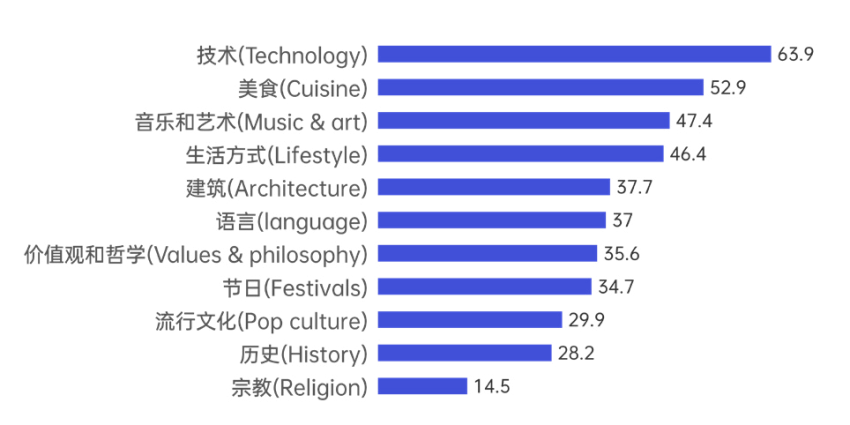
Figure 2.2 Ranking of Foreign Cultural Absorption Preferences
Regional comparative analysis reveals that respondents' cultural absorption preferences present three distinct patterns: the "technology-first" model represented by 23 developing countries including Brazil, India, and Nigeria, with attention to technology reaching as high as 76.2%, reflecting emerging economies' strong aspiration for technological advancement; the top three concerns of 12 Western developed countries represented by the United States, Germany, and Australia include cuisine (63%), music (48.3%), and technology (47.9%); six developed countries including France, Italy, and Japan focus most on culinary culture (52.3%), followed by technology (46.7%), and lifestyle in third place (38.2%). Although the cultural absorption preferences of audiences from the country group represented by France and Italy resemble those of the country group led by the United States, this group's willingness toward various cultural absorptions is notably lower, which may be related to these six countries' profound cultural heritage and their maintenance of prudent and selective attitudes toward foreign cultures.
Age-based comparative analysis reveals systematic patterns in cultural absorption willingness across different age groups. Technology maintains the highest recognition across all age groups, with the 25-34 age group reaching 67% and the 18-24 age group at 64.7%, demonstrating younger demographics' heightened attention to technological innovation. The appeal of culinary culture increases progressively with age, rising from 46.8% among the 18-24 age group to 58.6% among the 55-65 age group, reflecting mature demographics' higher pursuit of quality of life. Enthusiasm for language learning presents a clear age-declining trend, decreasing from 41.3% among younger demographics to 29.9% among middle-aged and older demographics, embodying age-related differences in language learning capacity and motivation. The appeal of lifestyle similarly demonstrates age-declining characteristics, dropping from 52.2% among younger demographics to 37.4% among middle-aged and older demographics, reflecting varying degrees of openness to lifestyle changes across different age groups.
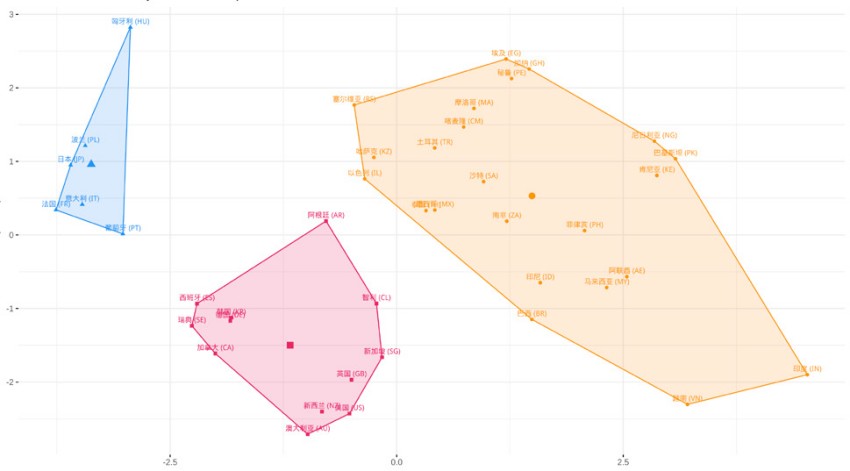
Figure 2.3 Cluster Analysis of Cultural Absorption Preferences (by Country)
Survey results indicate that respondents demonstrate diversified and balanced distribution characteristics in regional cultural preferences. Western European culture receives the highest favorability at 39.4%, demonstrating its prominent position in global cultural influence. North American (30.8%) and East Asian cultures (28.1%) rank second and third respectively, with this ranking reflecting respondents' relatively higher attention to cultures from economically developed regions. The preference proportions for South American, Northern European, and Eastern European cultures are 25.3%, 24.8%, and 24.5% respectively, with these three showing similar proportions. Although the overall ranking shows minimal variation across different age groups, younger demographics demonstrate higher preferences for South American, South Asian, East Asian, and Middle Eastern cultures compared to older groups, reflecting young people's pluralistic orientation in cultural preferences.
Survey results reflect that respondents' cultural absorption preferences embody the fundamental characteristics of being "technology-first, life-oriented, and spiritually attentive," emphasizing both highly practical technological and lifestyle cultural elements while maintaining an open attitude toward spiritual and cultural content such as arts and philosophy. The relatively balanced distribution of regional cultural preferences reflects the multipolarization trend of cultural influence among different civilizational spheres under globalization, as well as the internationalization and inclusiveness of respondents' cultural perspectives. Such diversified cultural absorption preferences provide extensive collaborative space and development potential for cross-cultural exchange and mutual learning.