RENMIN UNIVERSITY of CHINA






While traditional culture demonstrates the profound heritage of Chinese civilization, popular culture and technological achievements showcase the innovative vitality and contemporary character of modern China. Contemporary Chinese culture encompasses a broad and diverse range of touchpoints, from social media to digital gaming, from fashion brands to film and television productions—modern Chinese popular culture is reaching the world at unprecedented speed and scale. Simultaneously, as a vital component of modern Chinese civilization, China's global technological influence has become increasingly prominent. Technological products such as smartphones, artificial intelligence, and electric vehicles are not only transforming people's lifestyles but also serving as important windows through which overseas populations perceive contemporary China. This section focuses on overseas perceptions and attitudes toward Chinese popular culture and Chinese technology, conducting an in-depth analysis of how modern Chinese civilization constructs new cognitive landscapes and emotional connections on a global scale through the dual vehicles of popular culture and technology, thereby opening broader developmental horizons for the international dissemination of Chinese civilization.
I. Chinese Popular Culture Fosters People-to-People Connectivity
The results indicate that the influence of Chinese popular culture overseas is experiencing significant growth. A remarkable 86.2% of respondents reported having encountered modern Chinese popular culture, a figure that fully reflects the penetration of Chinese popular culture on a global scale. More notably, 59.1% expressed interest in Chinese popular culture, demonstrating that such exposure has translated into substantive engagement. From a regional distribution perspective, respondents from Asia, South America, and Africa show particularly pronounced interest in Chinese popular culture, all exceeding 60%, which is markedly higher than other regions.
The Chinese popular culture encountered by global audiences demonstrates diversified characteristics. Chinese social media platforms (such as TikTok) rank first with 44.1%, followed closely by Chinese films at 40.9%. Other forms of popular culture also occupy significant positions: Chinese fashion brands (32.9%), Chinese television dramas (32.8%), and Chinese animation (32.3%) all exceed thirty percent. Additionally, digital games produced by Chinese companies achieve an exposure rate of 28.9%, while Chinese popular music (21.7%) and Chinese online novels (16.1%) have relatively lower exposure rates but still maintain considerable influence.
In the view of respondents, the appeal of modern Chinese popular culture is primarily manifested in three aspects. Production/technical quality (46.3%) and visual/aesthetic style (46.2%) constitute the two core elements of modern Chinese popular culture's attractiveness, running virtually neck and neck. Meanwhile, the modern expression of traditional Chinese cultural elements has also become a significant attraction factor, accounting for 41.4%, reflecting the unique charm of Chinese popular culture in integrating traditional and contemporary elements. The appeal of innovative forms of expression stands at 35.5%, while the attractiveness of storylines/content is relatively lower at 30.3%—a finding that merits deeper consideration.
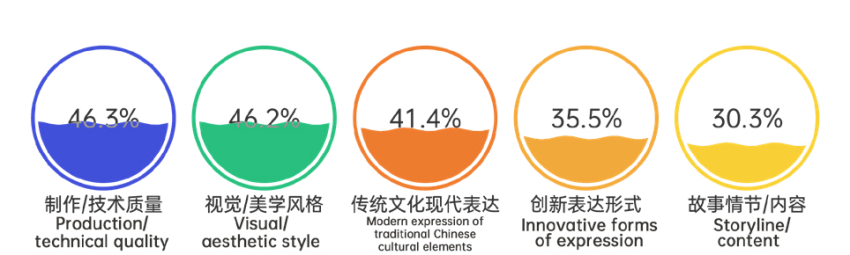
Figure 5.1 Sources of Appeal of Modern Chinese Popular Culture
Chinese popular culture not only enriches the spiritual lives of overseas populations but has also become an important window through which they understand and experience China. The survey reveals that 65.1% of respondents believe Chinese popular culture has enriched their personal lives, while 77% consider that Chinese popular culture has helped them better understand China. This fully demonstrates the positive role that Chinese popular culture plays in promoting cultural exchange and enhancing mutual understanding.
The overseas recognition of Chinese popular culture profoundly demonstrates the vital significance of combining cultural inheritance with innovation. Modern Chinese popular culture, serving as an important vehicle for the creative transformation and innovative development of traditional culture, actively adapts to the demands of contemporary development while maintaining profound cultural foundations. It not only showcases the historical depth and cultural richness of Chinese civilization but also embodies the contemporary characteristics and innovative spirit of keeping pace with the times, becoming an important bridge and bond for fostering people-to-people connectivity in the process of building a community with a shared future for mankind.
II. Technological Innovation as an Important Component of Modern Chinese Civilization
This survey reveals that Chinese technology demonstrates significant influence overseas. Overall, 77.2% of respondents pay attention to Chinese technology or its applications, a proportion that exceeds the attention given to Chinese traditional culture and popular culture, fully highlighting the unique role of technological innovation in cultural dissemination.
Overseas populations demonstrate distinctly differentiated characteristics in their attention to specific Chinese technological fields. Smartphones rank first with 61.3% attention, serving as the primary gateway for overseas populations to engage with Chinese technology. Artificial intelligence technology follows closely with 47.9% attention, reflecting China's global influence in this cutting-edge technology. Electric vehicle technology receives 42.1% attention, embodying the international resonance of green mobility concepts. Communication equipment and 5G technology garner 37.3% attention, demonstrating China's leading position in the telecommunications sector. In contrast, electronic games, short video applications, cross-border e-commerce platforms, drones, and mobile payment systems receive relatively balanced attention, ranging between 20% and 30%, forming a diversified landscape of technological interest.
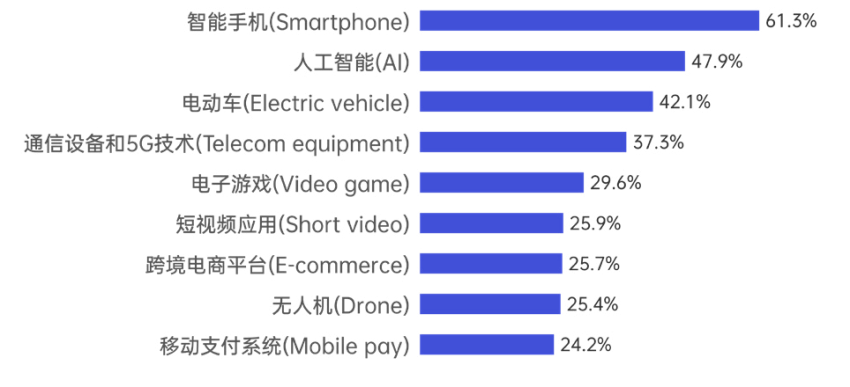
Figure 5.2 Ranking of Attention to Chinese Technology Application Fields
Overseas populations generally believe that Chinese technology empowers better personal lives. Among these, smartphones receive the highest positive evaluation at 75.8%. Communication equipment and 5G technology garner 71% positive evaluation. Technologies such as e-commerce, artificial intelligence, electric vehicles, and mobile payment systems all receive positive evaluations of approximately 65%, demonstrating high levels of recognition. Even in relatively emerging application fields such as drones, short video applications, and electronic games, positive evaluations reach levels of 54% to 57%.
More importantly, Chinese technological innovation has become a vital vehicle for Chinese cultural exchange. As many as 77.2% of respondents believe that Chinese technology helps them better understand China. Through associative analysis of specific technological innovation applications such as "Made in China," "Chinese Infrastructure," "Chinese E-commerce," and "Chinese Electric Vehicles," the overseas dissemination effects of Chinese technological innovation and its significant contribution to "telling China's story well" can be further revealed.
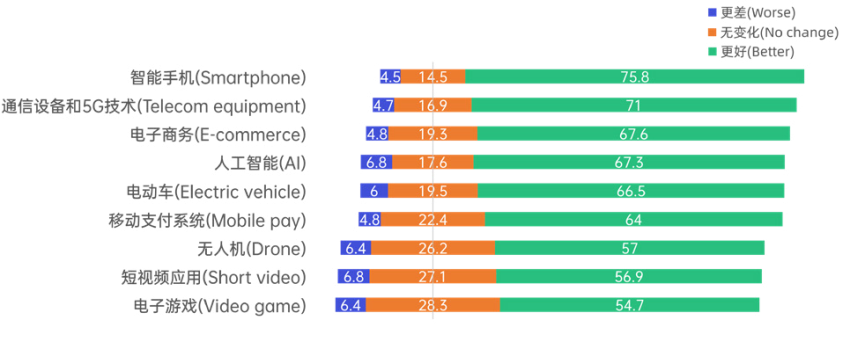
Figure 5.3 Impact of Chinese Technology Applications on Life (%)
"Made in China" presents diversified associative characteristics. Price advantage emerges as the primary associative element at 44.5%, reflecting the cost competitiveness of Chinese manufacturing. The association with Chinese technological innovation reaches 40.5%, indicating overseas populations' recognition of China's transformation from "manufacturing" to "innovation." Associations with Chinese economic development and Chinese engineering manufacturing capabilities stand at 36.7% and 35.6% respectively, reflecting global respondents' acknowledgment of China's comprehensive strength. The association with competition against Western technology markets accounts for 35.2%, demonstrating the significant position of Chinese manufacturing in the global market. The association with "world factory" comprises 31.8%, embodying the continuation of traditional perceptions. Notably, there exists certain polarization regarding quality perception: 23.7% of respondents associate it with high quality, while 17.3% associate it with low quality, reflecting the complexity and room for improvement in overseas perceptions of Chinese manufacturing quality.
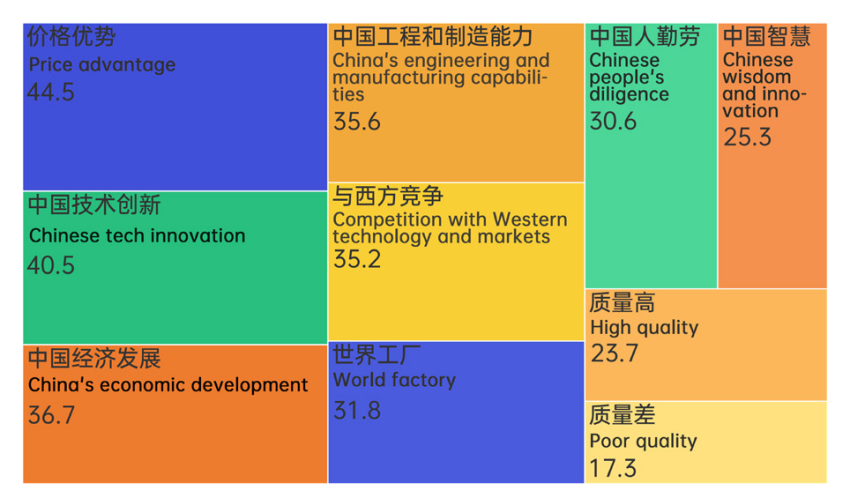
Figure 5.4 Cognitive Associations with "Made in China" (%)
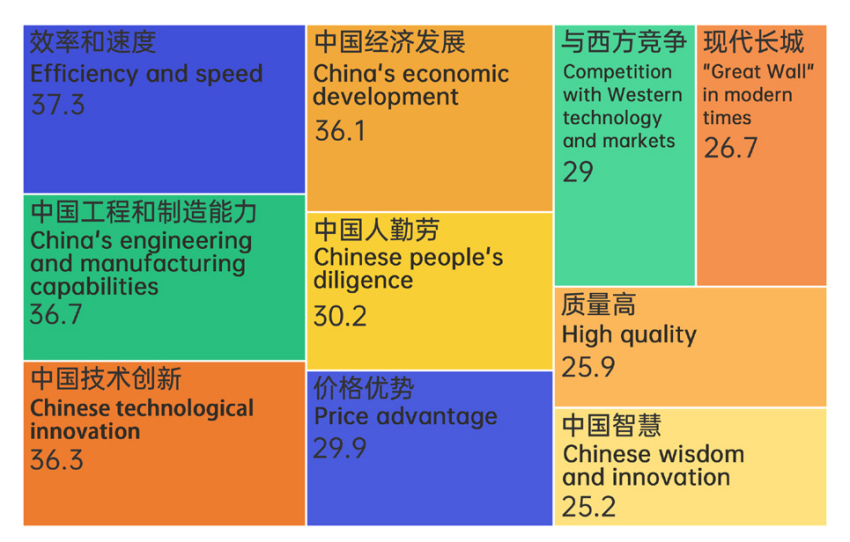
Figure 5.5 Cognitive Associations with Chinese Infrastructure (%)
Regarding overseas impressions of Chinese infrastructure, respondents' associations primarily focus on efficiency, speed, and engineering capabilities. Associations with efficiency and speed reach 37.3%, demonstrating the international influence of "China Speed." Associations with Chinese engineering and manufacturing capabilities account for 36.7%, showcasing overseas recognition of China's infrastructure prowess. Associations with Chinese technological innovation and Chinese economic development stand at 36.3% and 36.1% respectively, reflecting the close connection between infrastructure achievements and national development. Associations with the industrious and hardworking nature of the Chinese people comprise 30.2%, embodying recognition of the Chinese people's spiritual qualities. Price advantage and competition with the West account for 29.9% and 29% respectively, demonstrating the market competitiveness of Chinese infrastructure. Particularly noteworthy is that cultural associations viewing Chinese infrastructure as a modern version of the Great Wall comprise 26.7%, reflecting a unique perception that combines traditional culture with modern infrastructure development.
The analysis results for Chinese e-commerce closely resemble those of "Made in China." Price advantage remains the most prominent characteristic at 48.3%, reflecting the cost-effectiveness of e-commerce platforms. Associations with the globalization of Chinese goods account for 42.5%, reflecting the global trade integration driven by e-commerce. Associations with rapid delivery comprise 36.8%, demonstrating international recognition of logistics efficiency. Associations with Chinese technological innovation and convenient lifestyle both reach 30.7% and 30.3% respectively, embodying e-commerce's transformation of lifestyles. Associations with consumer culture transformation account for 26.3%, indicating the profound impact of e-commerce on consumption patterns. Quality perception similarly presents a polarized trend: 22.7% of respondents associate it with high quality, while 16% associate it with poor quality.
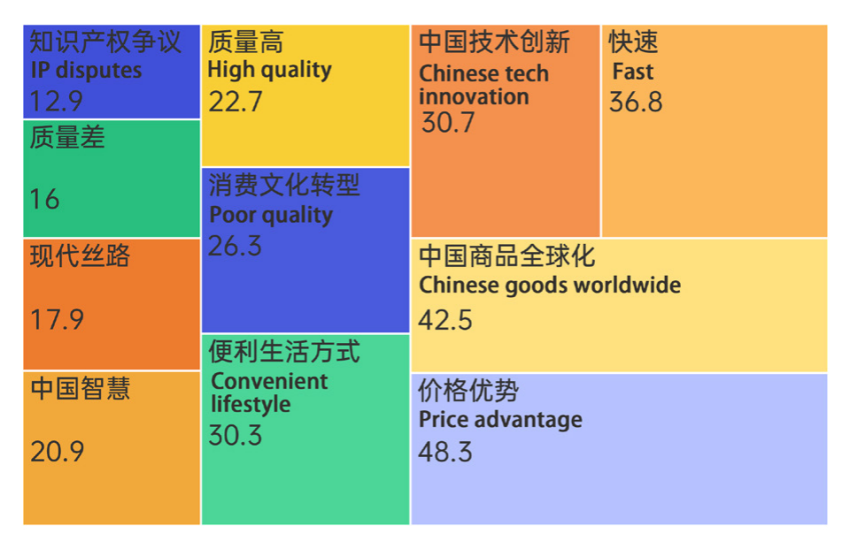
Figure 5.6 Cognitive Associations with Chinese E-commerce (%)
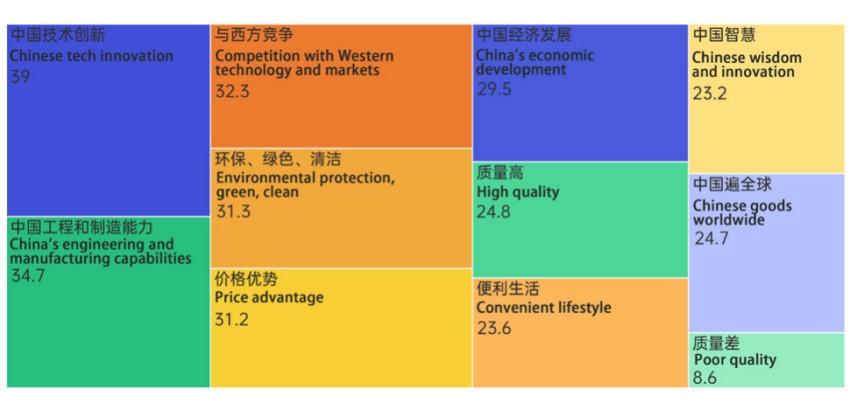
Figure 5.7 Cognitive Associations with Chinese Electric Vehicles (%)
Most remarkably, global respondents' associations with Chinese electric vehicles are prominently manifested in the dimension of technological innovation rather than low prices, highlighting the technological leadership advantages of this emerging industry.Associations with Chinese technological innovation reach 39%, ranking first, reflecting the innovation-driven characteristics of the electric vehicle industry. Associations with Chinese engineering and manufacturing capabilities account for 34.7%, demonstrating manufacturing prowess. Associations with competition against Western technology markets comprise 32.3%, reflecting the international competitive landscape of the electric vehicle industry. Associations with environmental protection, green technology, cleanliness, and price advantages account for 31.3% and 31.2% respectively, embodying the integration of green development concepts with market advantages. Associations with Chinese economic development stand at 29.5%, indicating the significant importance of the electric vehicle industry to economic development. Unlike "Made in China" and Chinese e-commerce, Chinese electric vehicles demonstrate particularly positive performance in quality perception: 24.8% of respondents associate them with high quality, while only 8.6% associate them with poor quality, indicating more positive quality recognition and a favorable industry image.
Taken together, the widespread global application of technological products such as smartphones, artificial intelligence, and electric vehicles not only fully demonstrates China's technological innovation capabilities and manufacturing strength, but also serves as an important window for overseas populations to understand contemporary China's development achievements. This technology-driven cultural communication model profoundly embodies the deeper connotations of people-to-people connectivity within the Belt and Road Initiative, providing solid technological support and innovative pathways for cultural exchange in building a community with a shared future for mankind.