RENMIN UNIVERSITY of CHINA





On March 29, the Global Leadership Forum (2026) was held at Renmin University of China (RUC), bringing together distinguished guests to discuss China’s high-level opening-up and the cultivation of global leadership talent, while jointly envisioning the future of global governance.
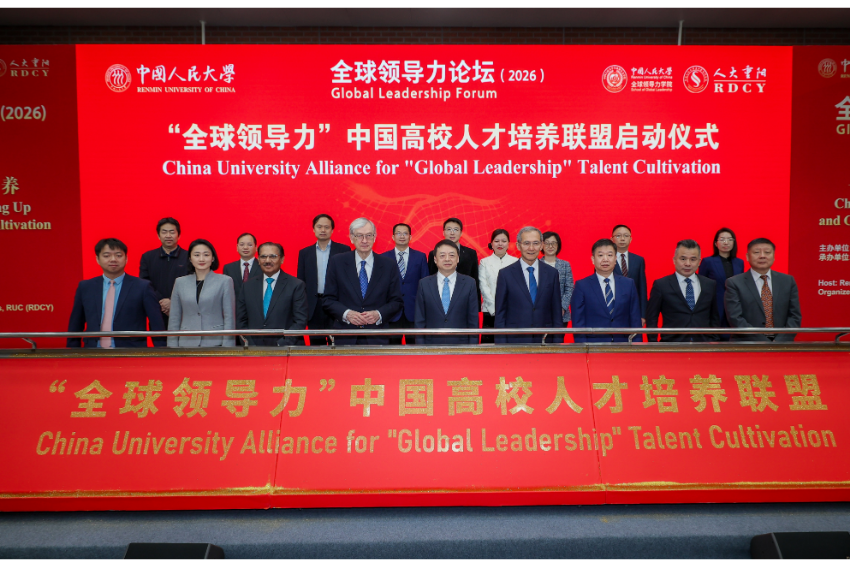
The forum was attended by Ma Huaide, president of RUC, and Wang Liyong, director of the China Center for Contemporary World Studies, along with representatives from relevant Chinese agencies and international guests. The event was moderated by Zheng Xinye, vice president of RUC.
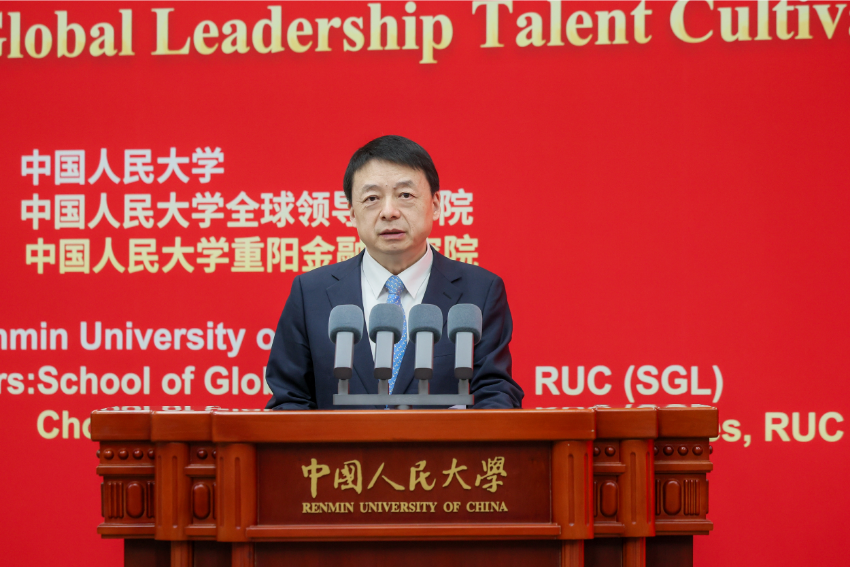
In his remarks, Ma Huaide emphasized that the international community is calling for a new type of global leadership—one capable of navigating complexity and advancing win-win cooperation. He noted that RUC has taken the lead in establishing China’s first School of Global Leadership, aiming to cultivate forward-looking leaders who can shoulder responsibility in global governance, champion common values of humanity, and inject sustained vitality into building a community with a shared future for humanity.
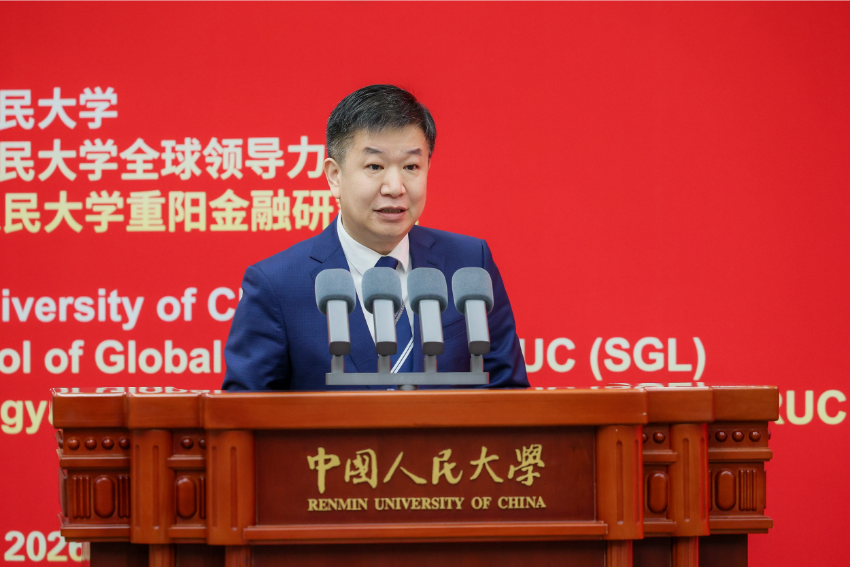
Wang Liyong stated that the world needs responsible and committed global leadership more than ever. Cultivating young leaders with a global vision, a strong sense of responsibility, and a spirit of cooperation is essential to advancing the building of a community with a shared future for humanity. He expressed confidence that the newly-launched China University Alliance for Global Leadership Talent Cultivation will help nurture more future leaders.
During the launch session, Wang Wen, dean of the School of Global Leadership at RUC, unveiled several key outputs, including the think tank reports Exploring the “China Model” for Cultivating Global Leadership Talent Toward 2050—Core Essentials and Practical Orientations and Reshaping Global Leadership in the Era of AI—Paradigm Evolution, Political Philosophy Shift, and the Chinese Path, as well as the 2026 Admission Plan for the Overseas Elite Program on Governance.
The first report systematically proposes a four-dimensional talent development framework guided by the “Comprehensive Development 2050” vision and anchored in the concept of a community with a shared future for humanity, along with 10 core competencies. The second report outlines a China-oriented pathway centered on co-construction and shared benefits, aiming to promote a more equitable and inclusive global governance system in the age of AI.
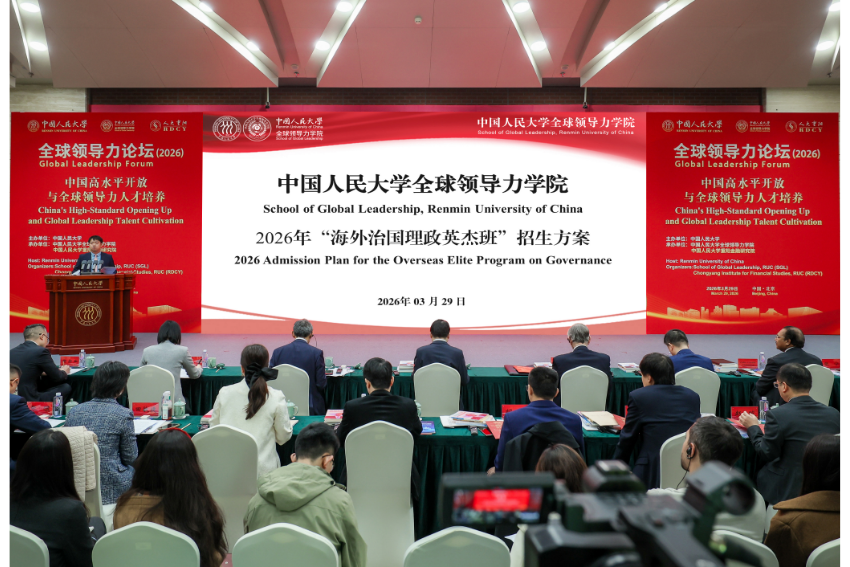
The 2026 “Overseas Elite Program on Governance” will recruit and train officials and young leaders from Russia, Eurasian countries, and Latin America, with the goal of cultivating high-level global governance talent that combines academic depth with practical capability.
At the forum, the “China University Alliance for Global Leadership Talent Cultivation” was officially launched, witnessed by representatives from more than 10 leading Chinese universities. Initiated by RUC, the alliance brings together nine domestic universities and their international education institutions to build an open, collaborative platform for innovation in global leadership education, promoting resource sharing and mutual learning.
Former President of Slovenia Danilo Türk, former Prime Minister of Kyrgyzstan Djoomart Otorbaev and Zafar Uddin Mahmood, Special Representative of the Prime Minister of Pakistan on China Affairs, delivered keynote speeches.
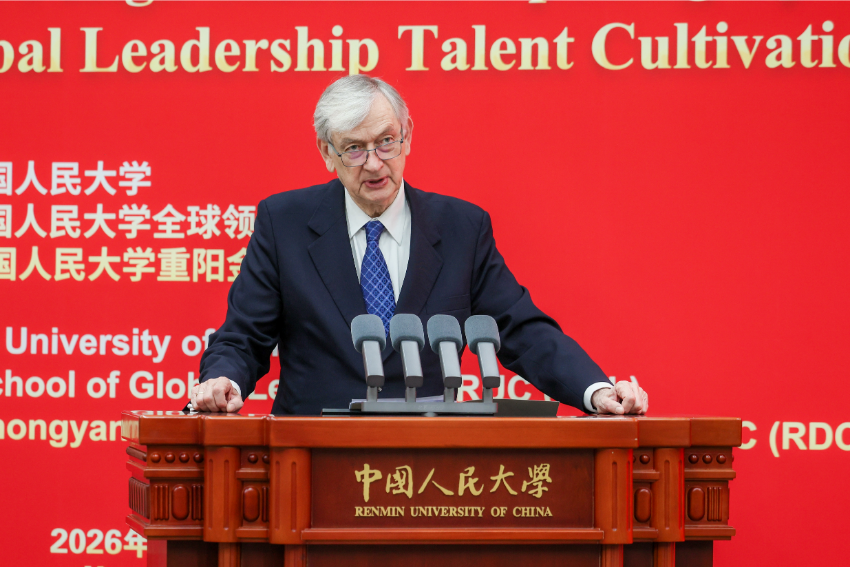
Danilo
Türk highlighted China’s “quiet leadership” in international affairs,
characterized by prudence, pragmatism, and respect for other nations,
and called for more open and inclusive global cooperation, particularly
in the field of artificial intelligence.
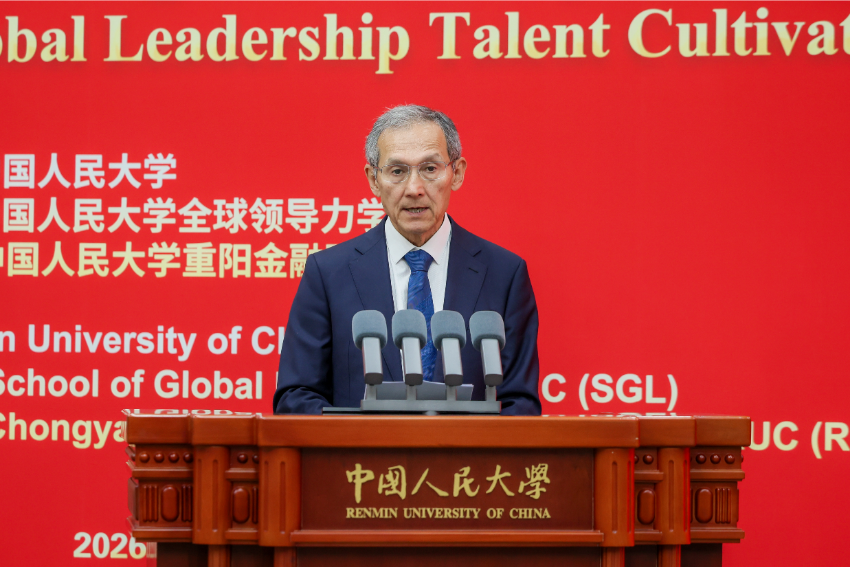
Djoomart Otorbaev noted that China is actively cultivating global leadership talent, and that the alliance reflects China’s emphasis on integrating theory and practice, adopting a systemic perspective, and maintaining a long-term vision.
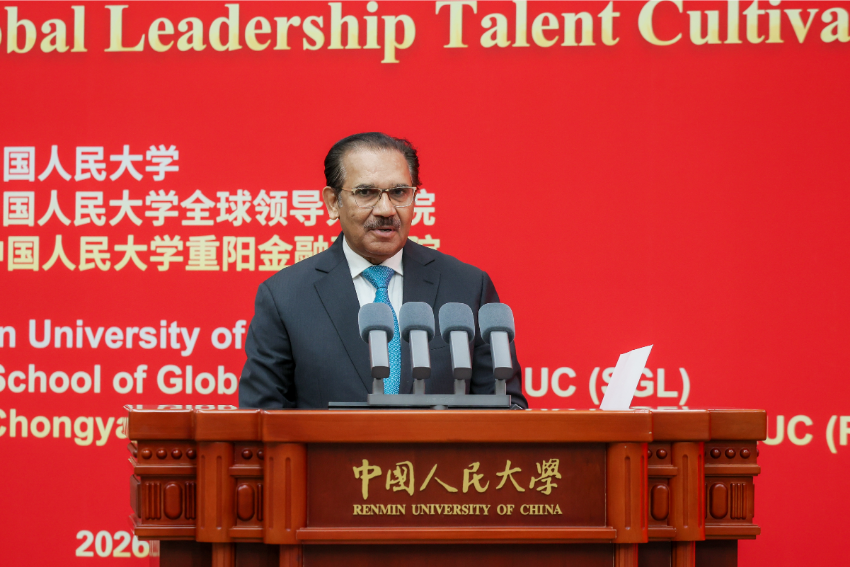
Zafar Uddin Mahmood pointed out that as one of the major beneficiaries of the Belt and Road Initiative, Pakistan has made significant progress in areas such as energy and infrastructure, and that China’s global leadership programs offer valuable, adaptable experiences for developing countries.
During the roundtable session, scholars from various universities engaged in in-depth discussions on topics including innovative practices in global leadership education and pathways for developing a model with Chinese characteristics and global relevance.
Since its launch in 2025, the Global Leadership Forum has become an important platform for exchange and cooperation among universities, think tanks, and international organizations. Established in November 2024, the School of Global Leadership at RUC is committed to promoting world peace and development and advancing the building of a community with a shared future for humanity, while cultivating strategic leaders, facilitators of cross-cultural dialogue, and builders of a global community beyond borders.