RENMIN UNIVERSITY of CHINA





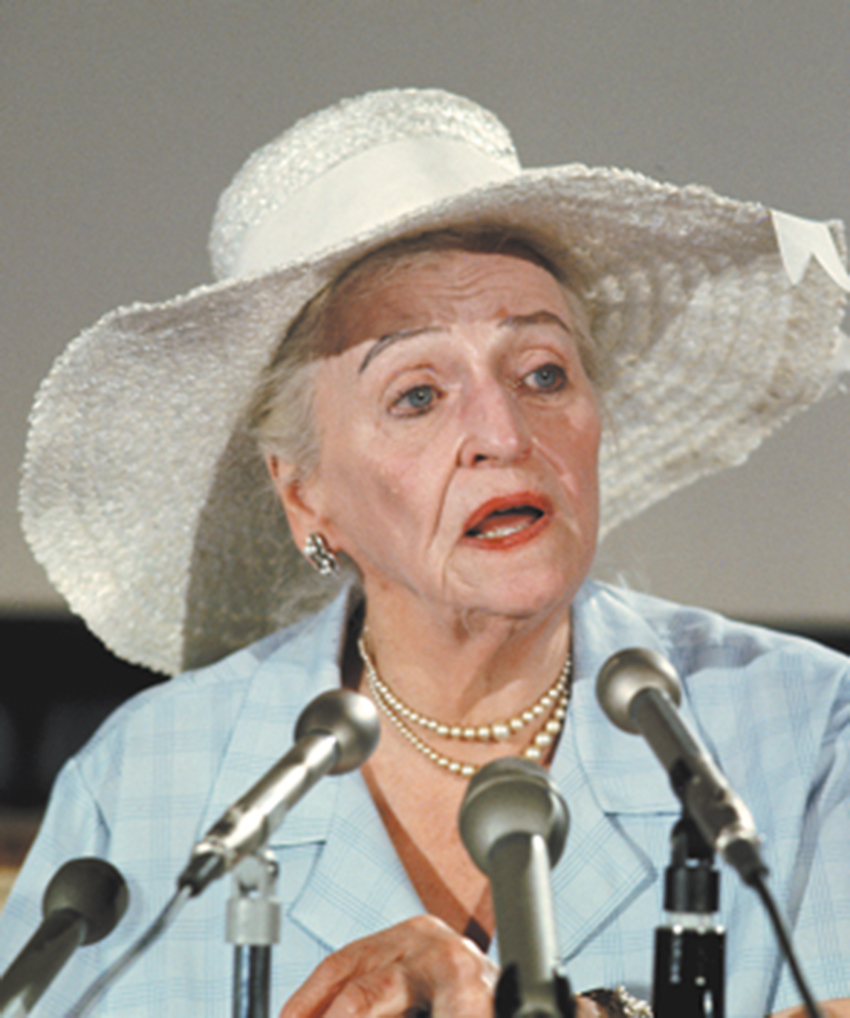
In the history of Sino-US exchanges, Nobel Prize-winner Pearl S Buck, a writer from the United States also known as Sai Zhenzhu, stands prominently as "the most influential Westerner to write about China since the 13th century's Marco Polo", as described by late US historian James C Thomson Jr.
Buck's true significance lies in her approach to cross-cultural understanding, says Guo Yingjian, a specially appointed professor at Renmin University of China, one of the earliest Chinese scholars to research Buck.
"She shows us that effective cultural exchange doesn't start with labels, ideological judgments, or demonization. Instead, it begins with understanding people's lives: their suffering, dignity, and shared emotions," he says.
Through reading her popular and sympathetic novels, particularly The Good Earth, Americans' perceptions of China changed significantly in the 1930s and 40s.
"The majority of Chinese were seen for the first time in literature as honest, kindhearted, frugal-living, hard-working, deity-fearing farmers who are much the same as American farmers," wrote Chinese scholar Liao Kang in 1997.
Buck's empathy went beyond pity, reflecting an understanding of others' circumstances, says Guo.
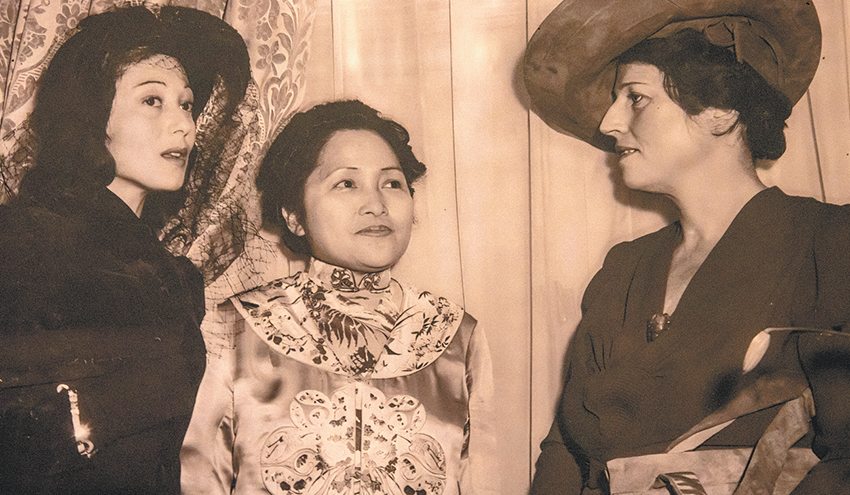
Pearl S Buck (right) at a United China Relief fundraising event in the US in 1941. She played an active role in encouraging and organizing fundraising efforts in the US.
She captured both the hardships and resilience of Chinese farmers, writing about not only poverty but also dignity, not only backwardness but also human complexity, he says. Consequently, the China she depicted, though not a full picture, was warm, textured, and humane, he adds.
One important reason Buck was able to represent Chinese characters with empathy and compassion lies in the fact that "she did not view China as a foreign tourist on a brief visit; rather, she lived and grew up in China, and spent a long time sharing the same world with ordinary Chinese people," says Guo.
Her writing about China did not stem from an abstract "Oriental imagination", but from everyday life, land ethics, family relationships, and basic human emotions, he notes.
A daughter of Southern Presbyterian missionaries, Buck left her hometown of Hillsboro, West Virginia, for China in 1892, when she was about four months old. In 1896, her family moved from Huai'an to Zhenjiang, Jiangsu province, where they lived for the next 18 years.
Unlike other missionaries, Buck's parents, Absalom and Caroline Sydenstricker, chose to live among Chinese people to fully immerse themselves in local culture rather than in isolated Westernized compounds.
Life in Zhenjiang greatly influenced Buck and her writing, especially the daily interactions with her nanny and tutor, says Lu Zhangping, director of the Zhenjiang Pearl S Buck Research Association.
In Zhenjiang, a local Chinese woman surnamed Wang cared for Buck for 18 years. Wang, kind and diligent, often cooked her delicious meals and snacks. Their relationship went far beyond that of servant and master. Wang treated her like her own child. Whenever Buck was punished by her mother for disobedience, Wang would quietly help her with the chores and offer guidance. From a young age, Buck had developed a deep respect and admiration for Chinese women.
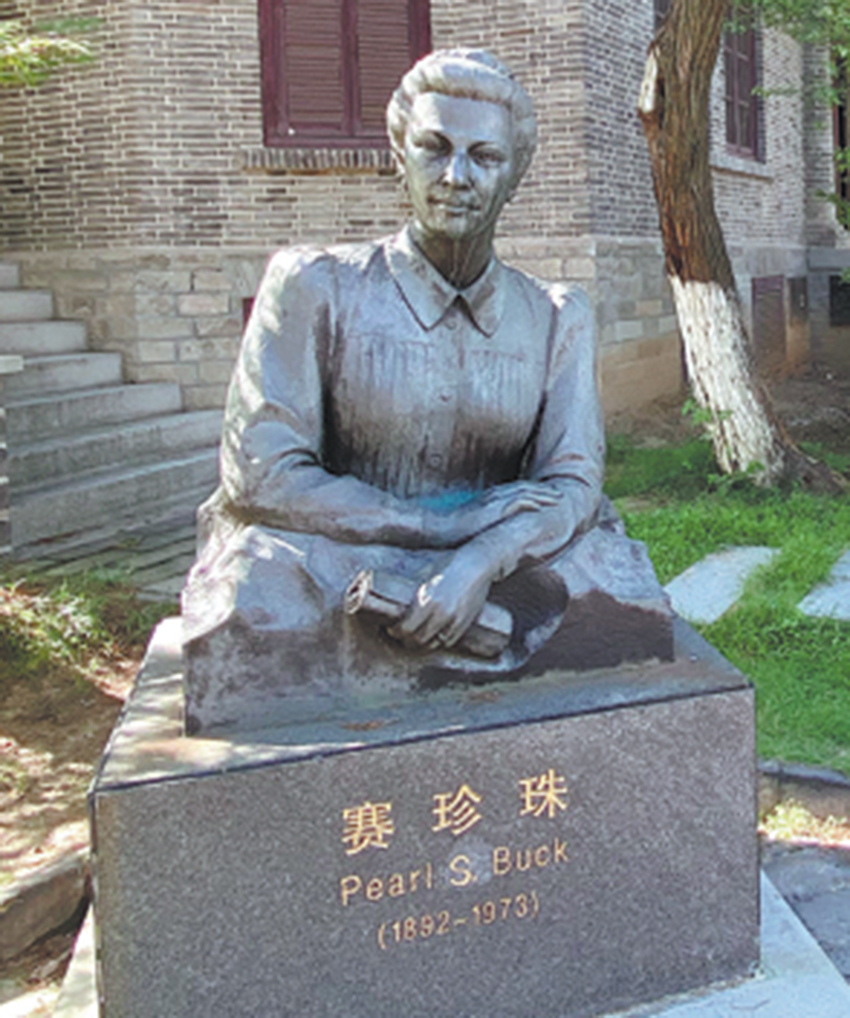
A photo taken on August 17, 2025, in Nanjing, Jiangsu province, shows a Western-style building, which is now home to the Pearl S Buck Memorial House.
Wang often told Buck tales about the famine during her own childhood, her family, and bandits; martial arts stories about standing up to the powerful; fighting injustice; and Chinese classics set in Zhenjiang, including Romance of the Three Kingdoms, The Legend of the White Snake and The Water Margin (or Outlaws of the Marsh).
Her parents hired a traditional scholar, 50-year-old Mr Kung, to teach Buck classical Chinese literature and thought. Mr Kung, originally from Beijing, moved to Zhenjiang after his house was burned down by German soldiers.
Every afternoon at 2 pm, Mr Kung arrived at Buck's home for two-hour lessons. He taught her about Confucius, Bodhisattva, Chinese history, classical literature, life maxims, and local customs and traditions. When answering her questions, he went beyond mere book knowledge, emphasizing the connection between the "source" and the "flow" that links the past, present and future. He also encouraged young Buck to study Chinese classical novels and taught her about the "Complete Library of the Four Treasuries" that was stored in Zhenjiang's Wenzong Ge, an ancient library.
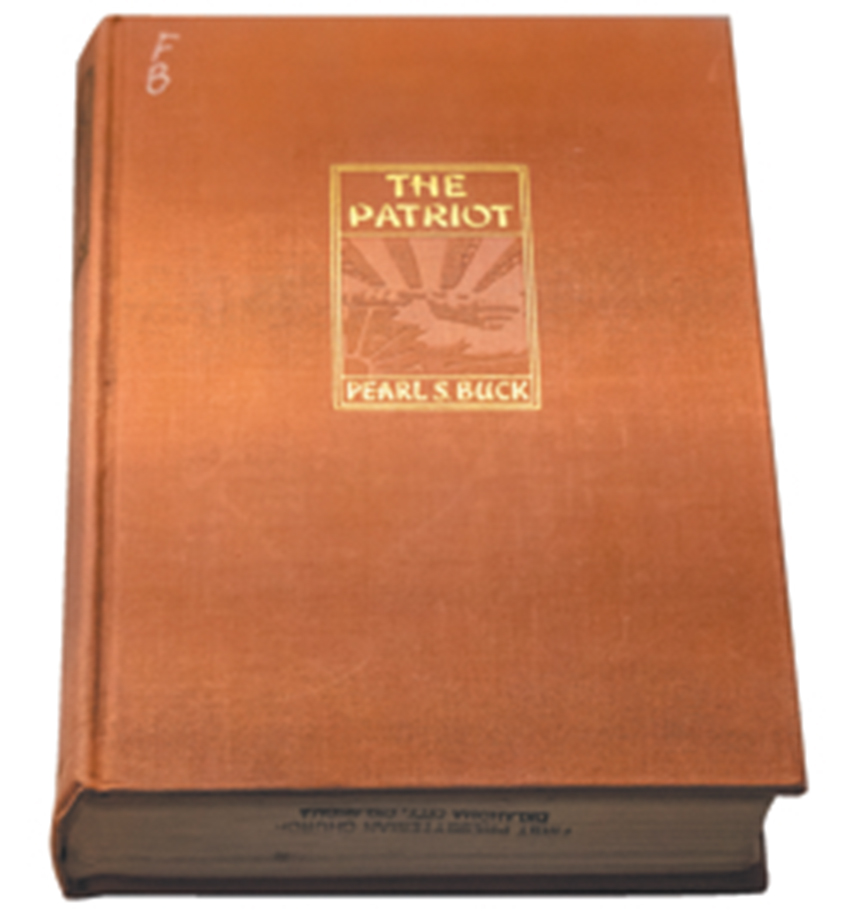
The Patriot, released in New York in 1939, was the first novel Pearl S Buck published after receiving the Nobel Prize in literature in 1938.
For 10 years, through reading classical texts and practicing calligraphy, She not only became well-versed in traditional Chinese classics and familiar with Chinese history, culture and geography, but also developed a beautiful regular-script style of writing, spoke fluent Mandarin, and even learned to carve seals. In Zhenjiang, she also witnessed the miserable lives of victims of the 1905 Yangtze River flood, which provided firsthand material for The Good Earth.
In 1910, Pearl Buck returned to the United States to attend Randolph-Macon Woman's College and, shortly after graduating in 1914, returned to China. She taught English in middle schools in Zhenjiang for two years and, after marrying John Lossing Buck in 1917, the couple went north to live in the countryside of Suzhou, Anhui province, to research life and agriculture in rural areas.
"During her four to five years in Suzhou, Pearl Buck learned about the rural areas and farmers in China more profoundly," Lu says.
From 1919 to 1934, the Bucks both taught at the University of Nanking. In the house located at No 3 Pingcang Alley, now in the Gulou Campus of Nanjing University, she completed her first novels, including East Wind, West Wind (1930), The Good Earth (1931), Sons (1933), and The Mother (1933), as well as a translation.
In 1933, Buck published the first English translation of The Water Margin, one of Chinese literature's Four Great Classic Novels of the Ming Dynasty (1368-1644), giving it the title All Men Are Brothers, a line she learned from the Confucian classic The Analects.
In 1938, when Buck received the Nobel Prize in literature, she gave a lecture, The Chinese Novel, in which she said, "My earliest knowledge of story, of how to tell and write stories, came to me in China". She also mentioned the "Complete Library of the Four Treasuries" she learned from Mr Kung.
The Good Earth, featuring a poor Chinese farmer's family caught in the tides of history, became an instant best-seller in the US and was translated into more than 30 languages. It won the Pulitzer Prize in 1932. In 1937, a film adaptation was produced and won an Oscar for Best Actress the following year.
In 1934, with much reluctance, Pearl Buck left China, but her connection with the Chinese people was never severed.
Since the 1920s, she had been writing articles for US magazines, including The Atlantic, Asia, The Chinese Recorder, and The Nation, on Chinese farmer's life, culture, the shifting roles of women, and China's social dynamics.
In the United States, Buck fully committed herself to humanitarian and cultural endeavors related to China.
In 1941, she became president of Asia magazine to promote modern Chinese literature, aiming to create vibrant, multidimensional Chinese characters that challenged Western stereotypes.
The same year, the East and West Association was established, and as the president, Buck utilized lectures, publications, broadcasts, and translations to spread Chinese culture and provide crucial international support for wartime China.
In 1943, Buck joined the Citizens Committee to Repeal Chinese Exclusion as a key spokesperson, publicly criticizing the exclusion laws. Her efforts contributed to the repeal of the Chinese Exclusion Act later that year.
During the Chinese People's War of Resistance against Japanese Aggression (1931-45), Buck steadfastly supported China's mission. Since the September 18th Incident in 1931, she had openly condemned Japanese militarism and consistently informed the American public about the realities of the war in China.
To aid China, she initiated the Book of Hope fundraising campaign in 1940 and subsequently led the China Emergency Relief Committee and the United China Relief agency, organizing large-scale fundraising efforts to provide medical supplies, build hospitals, and aid civilians and war orphans.
Throughout the war, she frequently used media platforms to voice her support. In 1938, she reviewed the book Red Star Over China, predicting China's revolutionary victory and in another article published later that year she praised Chinese guerrilla tactics. In 1942, she published the novel Dragon Seed, set against the backdrop of the Nanjing Massacre in 1937, during which 300,000 Chinese soldiers and civilians were killed, making it one of the most horrific atrocities of World War II.
In 1938, in the Banquet Speech of the Nobel Prize, Buck said: "I have never admired China more than I do now, when I see her uniting as she has never before, against the enemy who threatens her freedom. With this determination for freedom, which is in so profound a sense the essential quality in her nature, I know that she is unconquerable."
In 1945, she witnessed Japan's surrender to the Allies, marking the end of the war. In 1973, Buck died in Danby, Vermont, at 80. According to her will, her tombstone at Green Hills Farm in Pennsylvania bears no English name, no birth or death dates, and no epitaph — only three Chinese characters in seal script, handwritten by Buck herself: Sai Zhen Zhu, her Chinese name.
In the Statement on the Death of Pearl S Buck in 1973, former US president Richard Nixon said: "In life, Pearl Buck was a human bridge between the civilization of the East and West."
Today, China is quite different from the one depicted in Buck's works. Characterized with modernity, urbanization, globalization, and digitalization, modern China is a far cry from the one focused on land, villages, and family ethics in The Good Earth, Guo, the professor, says.
"If we still read Buck solely as a way to understand China's reality, we're missing the point," Guo says.
"In today's context of challenging Sino-US relations, her significance is in her reminder that even if relations between countries are tense, the possibility for understanding between individuals should remain," Guo says, adding, "It is an agreement we reached after discussing the significance of Pearl Buck with the Ministry of Education's China Center for International People-to-People Exchange in current cultural exchanges.
"No matter how dominant political narratives become, they cannot completely obscure the reality of ordinary people's lives. While the China she wrote about is in the past, the method she represents — understanding people through their humanity — is still relevant today," he stresses.
Source:https://mobile.chinadaily.com.cn/cn/html5/2026-05/14/content_016_6a04d8cced50be540e730437.htm